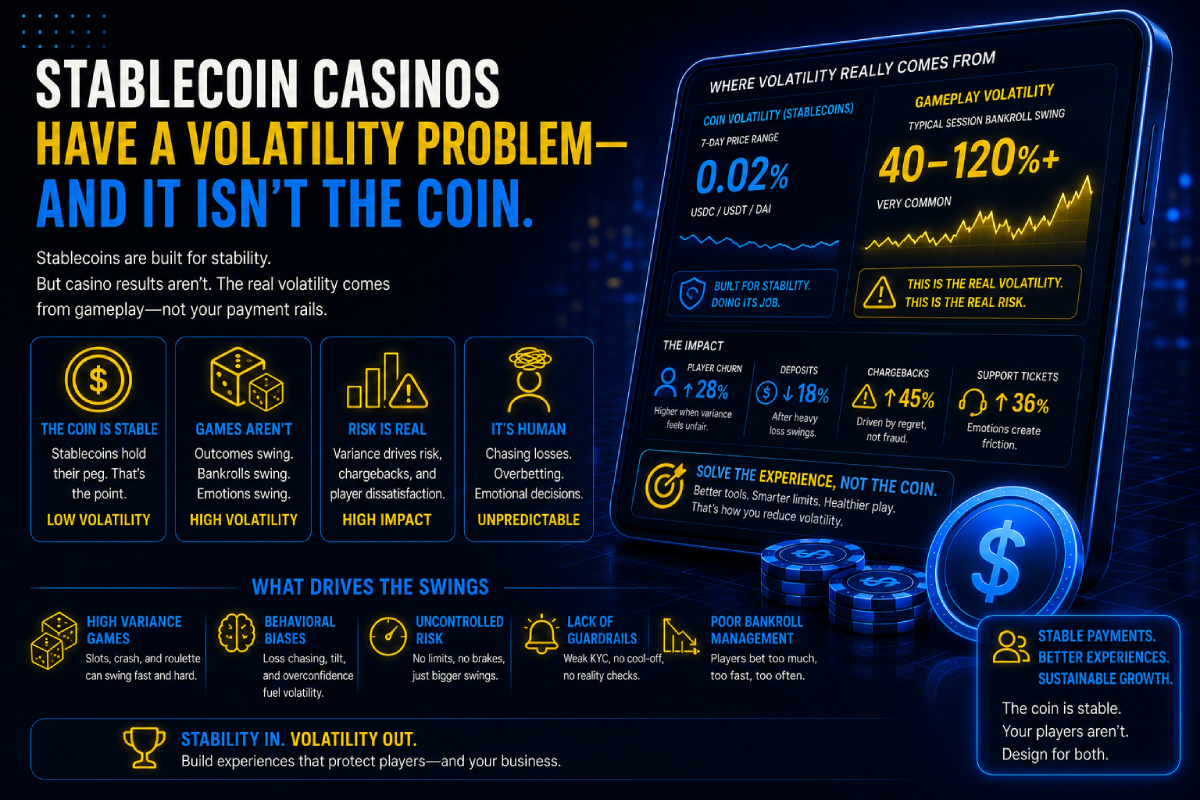
Stablecoin deposits took over crypto casino cashiers around 2024 for one obvious reason: no player wants to see their €200 balance turn into €140 because Bitcoin sneezed. USDT and USDC were meant to strip volatility out of the equation. In 2026, though, the volatility is back, it just moved from the coin to the terms.
Casinos have quietly rewritten how they handle stablecoin play so aggressively that the “stable” part of the pitch is starting to feel misleading. Wagering multipliers on stable-denominated bonuses, floating minimum-cashout thresholds, dynamic fees at the withdrawal step: all of it swings, all of it costs, and none of it appears on the deposit screen.
What actually changed this year
Stablecoin play used to feel like a straight swap for the euro or dollar. In 2026 more operators are treating it as a distinct currency for policy purposes, which is where the drift starts. Two players staking the same amount at the same table can now hit different wagering multipliers and different maximum bets depending on whether they funded in USDT or SEPA.
The four hidden costs
- Fx conversion at the cashier. The stablecoin balance may be converted to a house currency and back at a spread that eats 1-3% of a session.
- Higher wagering on stable bonuses. 35x wagering on a fiat bonus quietly becomes 45x on the stablecoin version.
- Withdrawal minimums that float. A $20 minimum can drift up to $50 depending on network congestion.
- Network fees passed to the player. Chains matter: TRC-20 stays cheap, ERC-20 spikes with mainnet gas.
Where the drift is worst
Offshore “crypto-first” casinos are the worst offenders because they operate without a regulator forcing consistent price disclosures. Licensed operators offering stablecoin payments are much better about publishing conversion rates and fees, though the fees still aren’t zero.
| Stablecoin practice | Reasonable | Warning sign |
|---|---|---|
| FX spread on deposit/withdraw | Under 1% | Above 2% |
| Wagering vs fiat equivalent | Identical | +10x or more |
| Withdrawal fee disclosure | Fixed and visible before submitting | Shown only on the confirmation screen |
| Supported networks | Multiple (TRC-20, BEP-20, native) | ERC-20 only, at your cost |
How to stay ahead of it
Deposit small first, do a dummy withdrawal before your real session, and read the promotion page you plan to accept, not just the deposit screen. If the casino won’t show fees before you submit, that’s all you need to know. Stablecoins are still a useful tool at casinos that treat them consistently with the fiat wallet; the volatility to watch for now is in the paperwork.
How this fits our reviews
Everything here reflects the way CasinoClaude tests casinos: real deposits, timed cash-outs and terms read to the last line. If you want to see the method applied to specific sites, pick a country from the top menu.
FAQ
Are stablecoins still worth using at casinos?
At operators that treat them consistently with the fiat wallet, yes, you skip banking hours and get faster settlement. The trouble is finding operators that do treat them that way; the rest add a layer of hidden cost.
Which stablecoin is cheapest to use?
USDT on TRC-20 is usually the cheapest for both deposits and withdrawals in 2026. USDC has better regulatory hygiene but often costs more to move across chains.
Do stablecoin bonuses lock you into the crypto wallet?
Increasingly yes. Many casinos won’t let you switch a bonus balance from USDT to EUR mid-wagering. Read the promo terms before you accept.